-
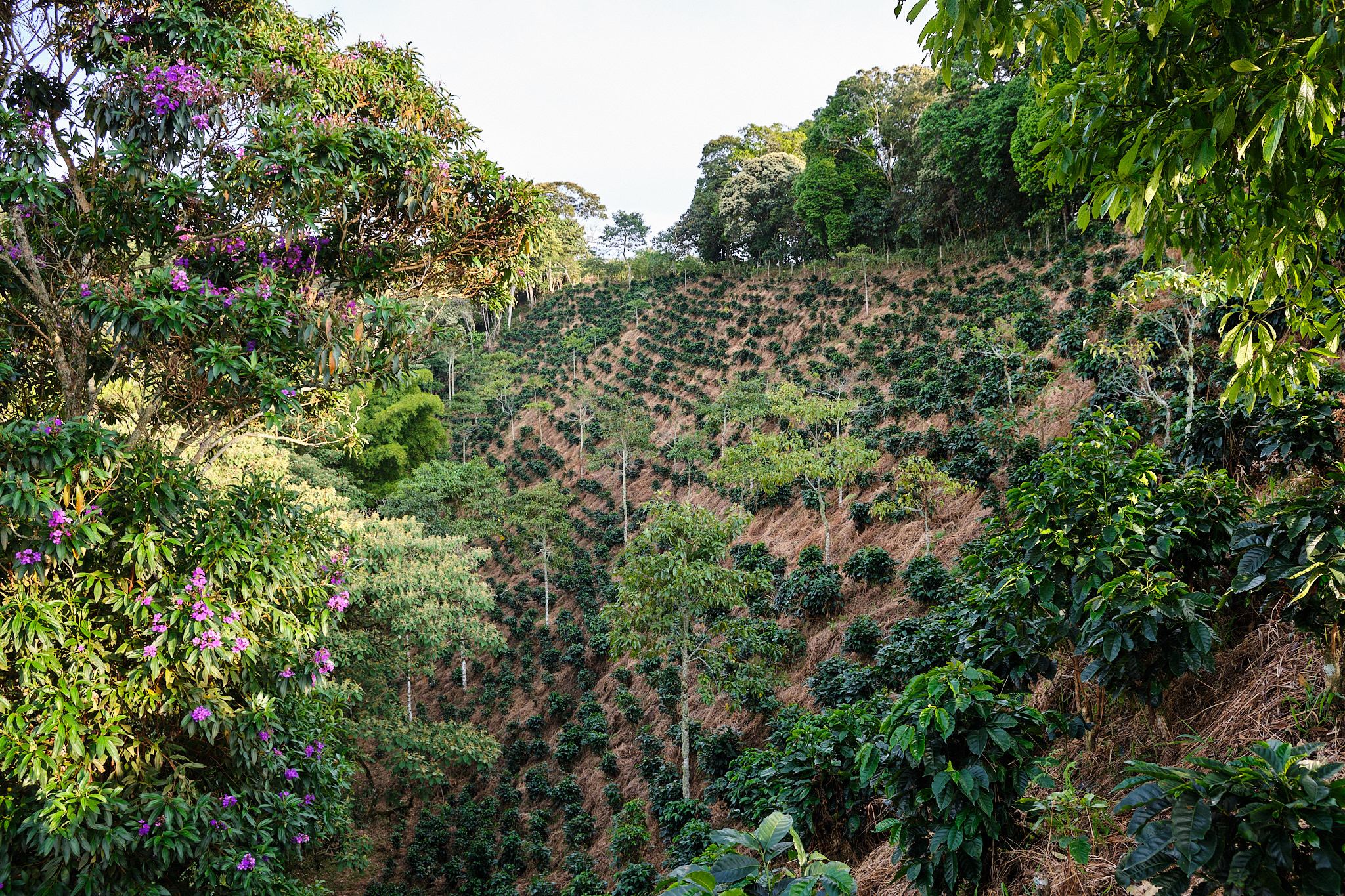
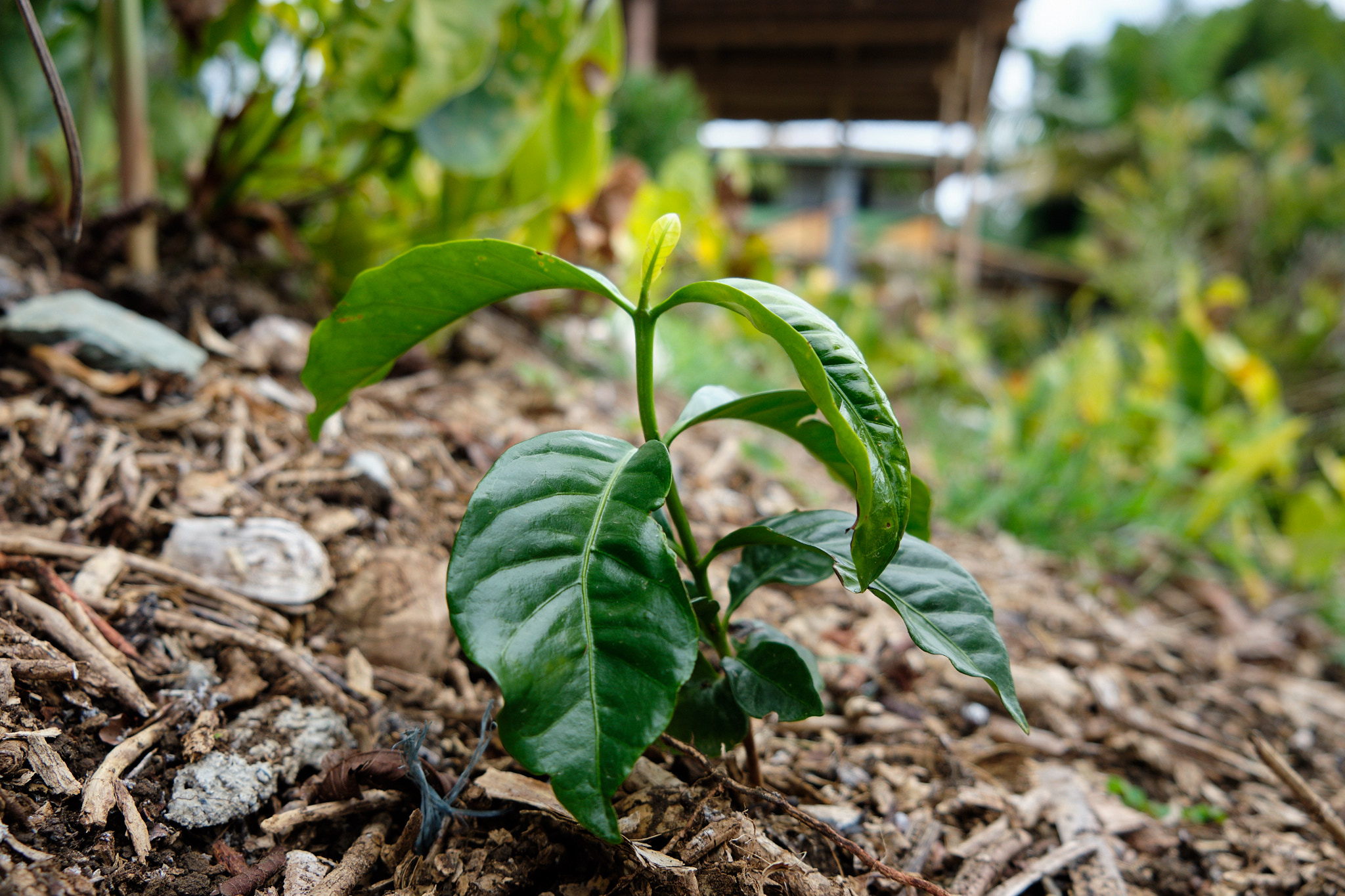
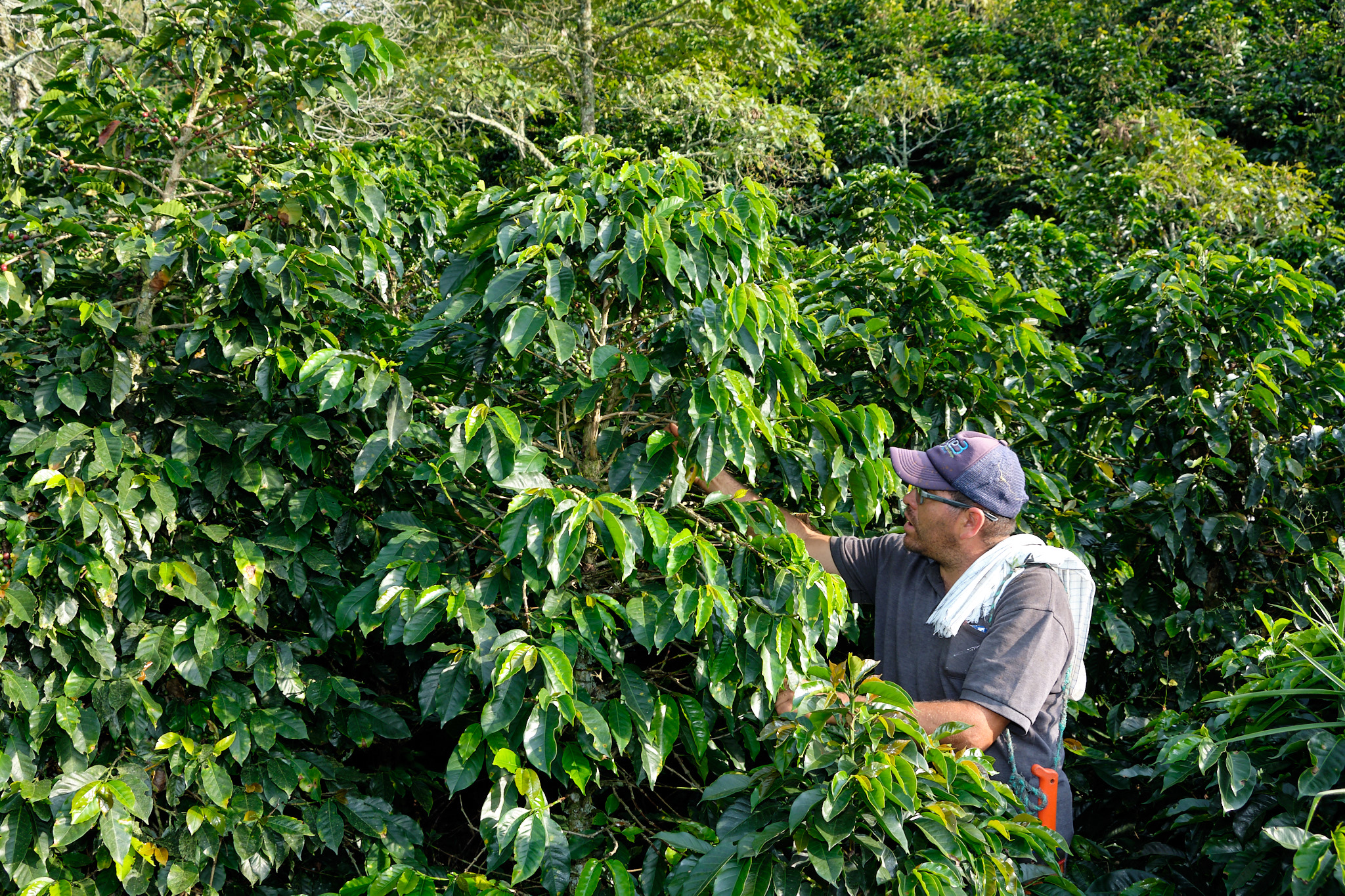
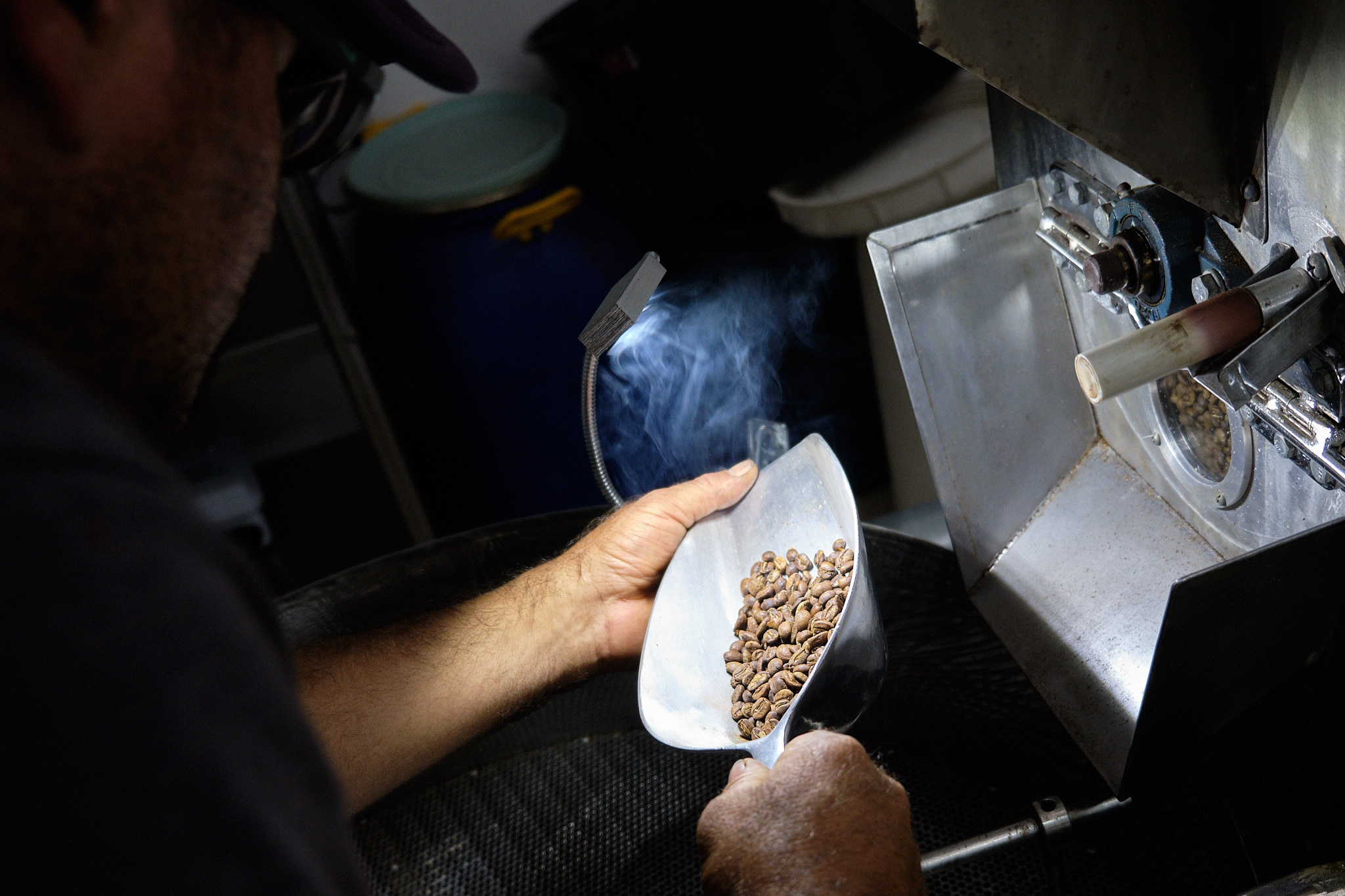
La Chapolera harvest 4 different varieties of coffee plants: Castillo, Castillo Rosario, Moca y Geisha. The plant begins normally to produce beans after 2 years of being planted, and they can live up to 100 years, but they are most productive at the ages between the 7th and the 20th years. The top branches need to be trimmed off from time to time to increase the productivity of the coffee plants. 1000 kg of ripe cherry coffee produces 400 kg of pulp and 600 kg of drivel coffee (depulped coffee) and 222kg of dry parchment coffee, which is then threshed, and roasted. One tree produces approximately 1kg of ripe cherries per year. La Chapolera has over 42000 trees in total.
-
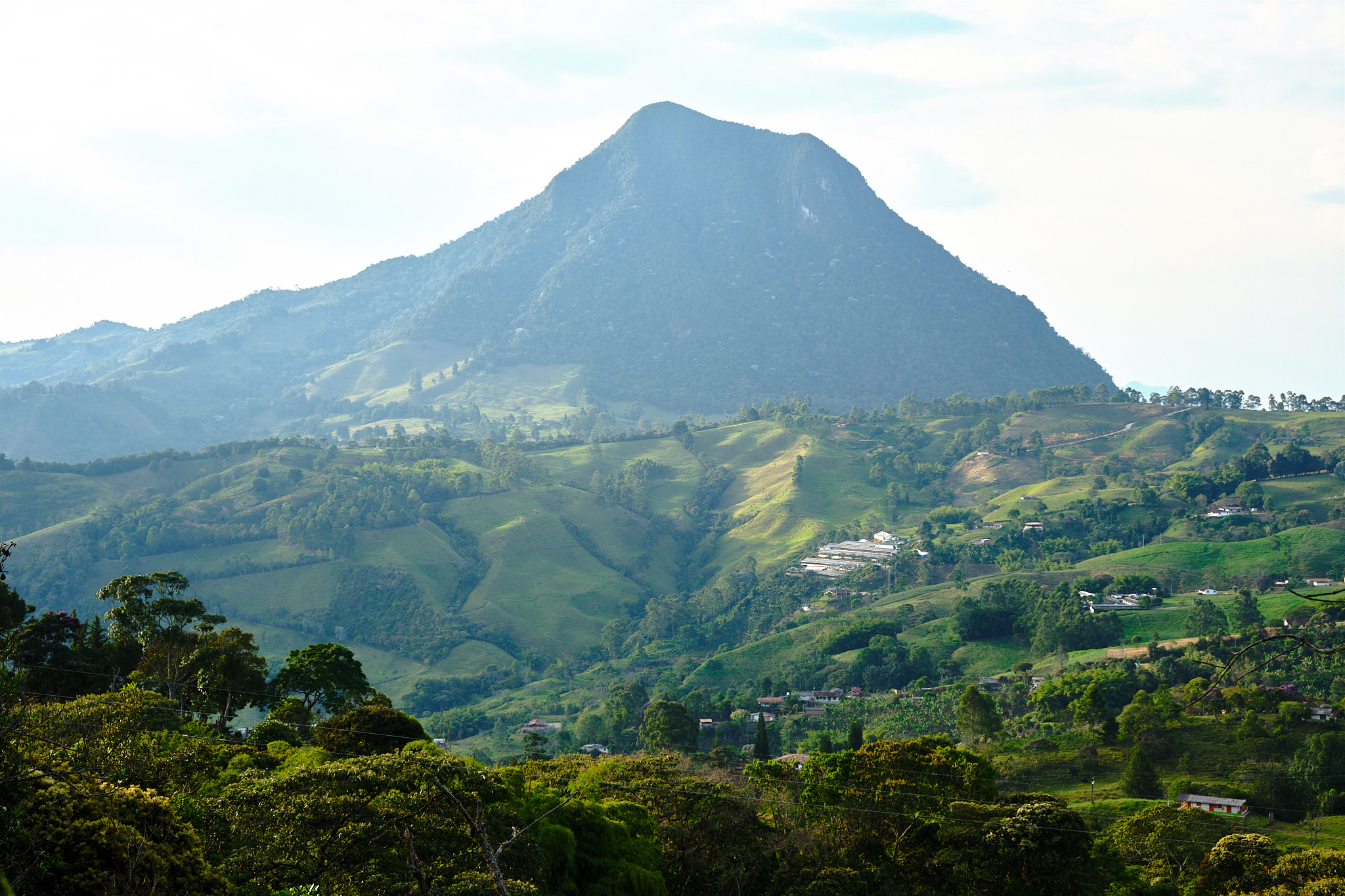
Cerro Bravo - Fredonia - 2650 Metters above the sea Level. This was the first region in Colombia traditionaly dedicated to the production of coffee.
-
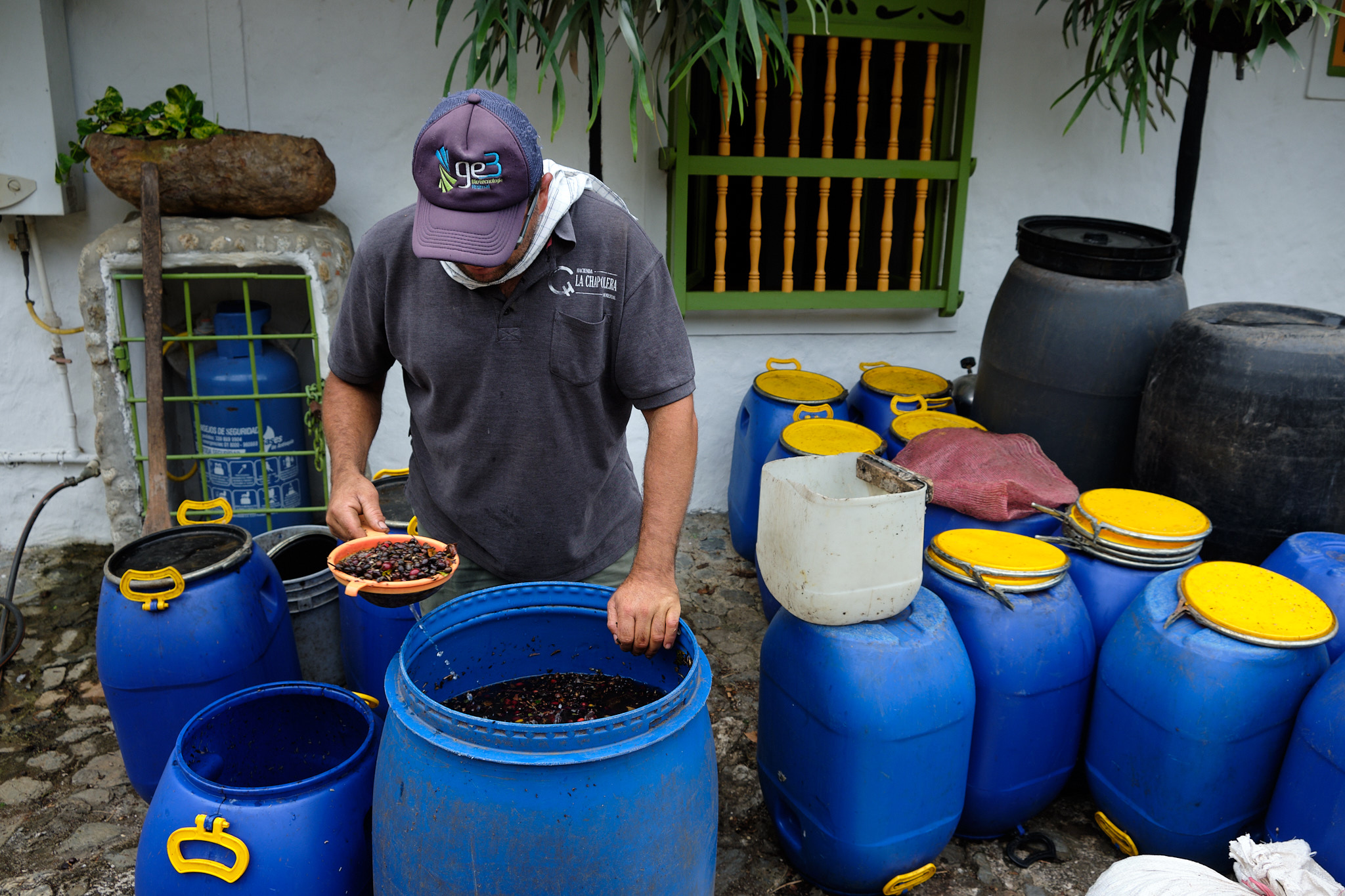
This process is called “flotado”, which means floating. The ripe cherry coffee beans are poured in these containers filled with water, and the ripe beans sink in the bottom while the not so ripe ones float on the surface. They are removed from the batch, to produce a different type of coffee, which is selled to the federation of coffee makers and other buyers who want a cheaper alternative. The process is more eco friendly than before, because it was traditionally made with running water instead of limited gallons of water.
-
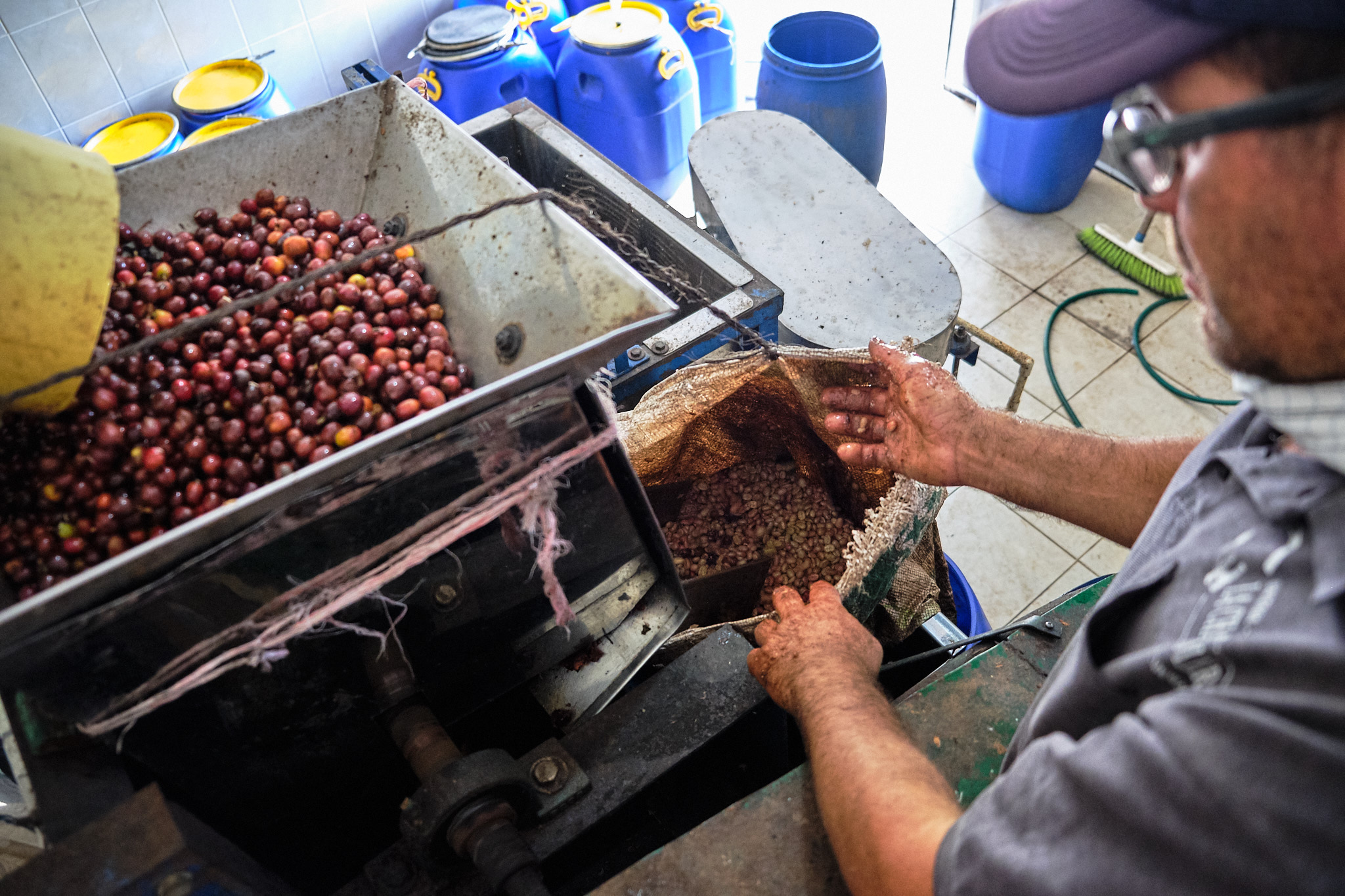
This process is the depulpation of the beans. The machine separates the pulp from the drivel coffee and the waste is separated and later used as fertilizer. Some coffee preparations need the beans to be washed of the sticky coating, because it makes the drying process easier. If the beans are left unwashed, they get a very sweet taste in the end, also called “honey” coffee. They are more expensive and are in three varieties: yellow honey, red honey and black honey. The difference is in the way the mucilage is washed in the yellow honey, and the humidity and type of drying process for the red and black honey.
-
DSCF6996
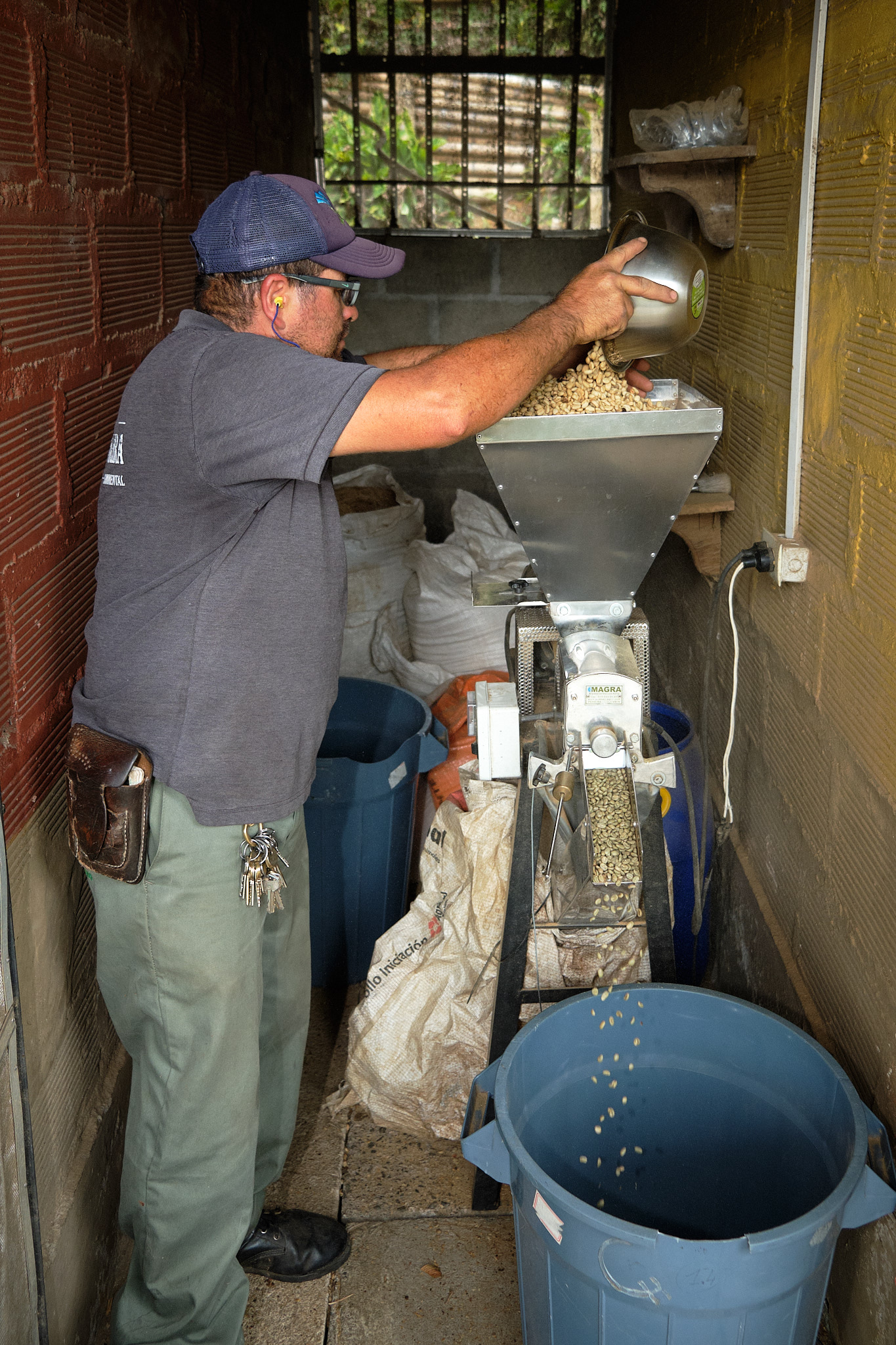
This is the threshing process, which is needed for getting rid of the dry protective shell of the coffee bean. The green beans are then filtered by size, usually between 12 and 16/64 of an Inch. The larger the beans, the more pricy they are.
-
DSCF7413
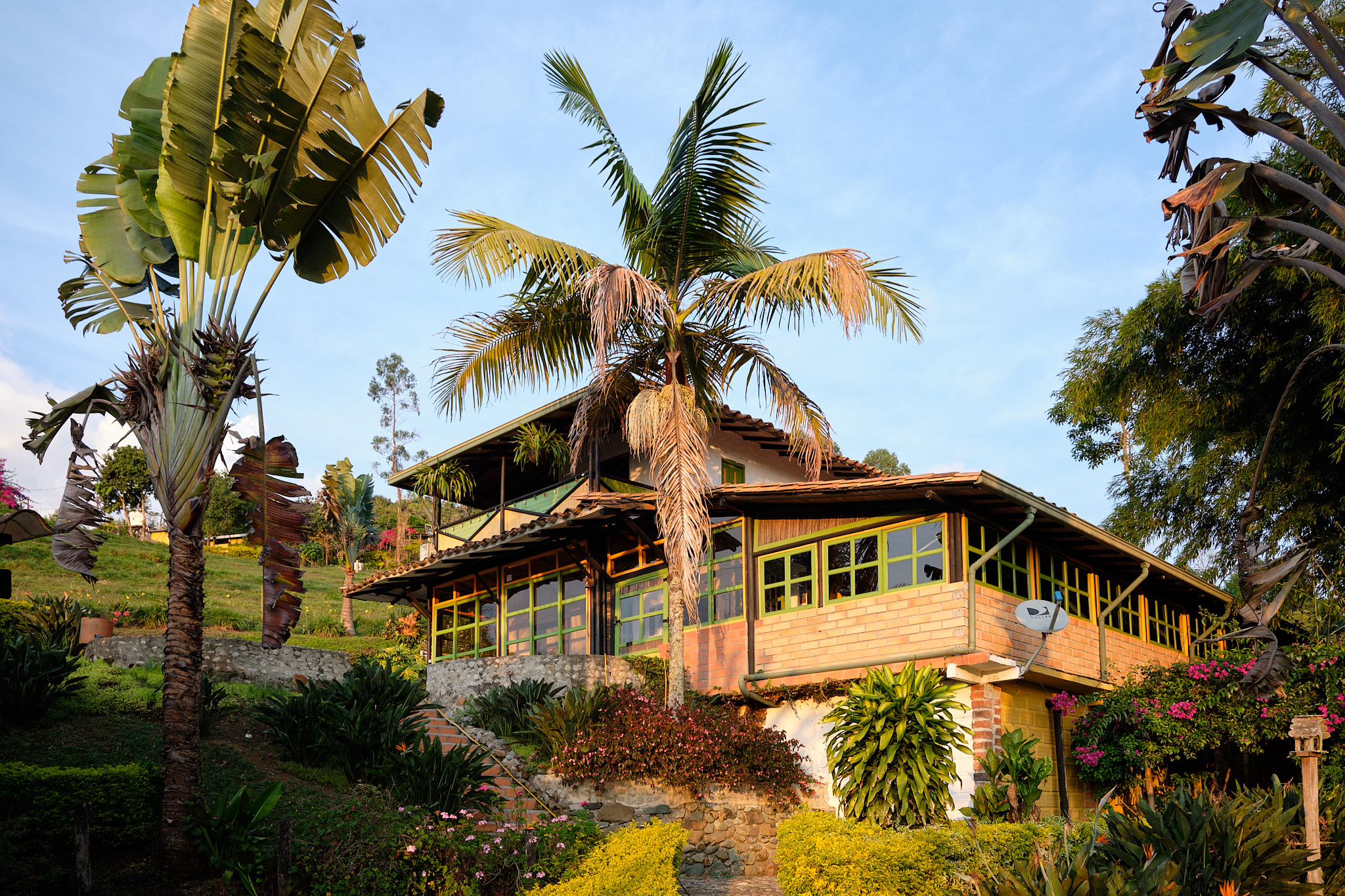
Main House of the Chapolera Farm, with plenty of rooms for their guests.
-
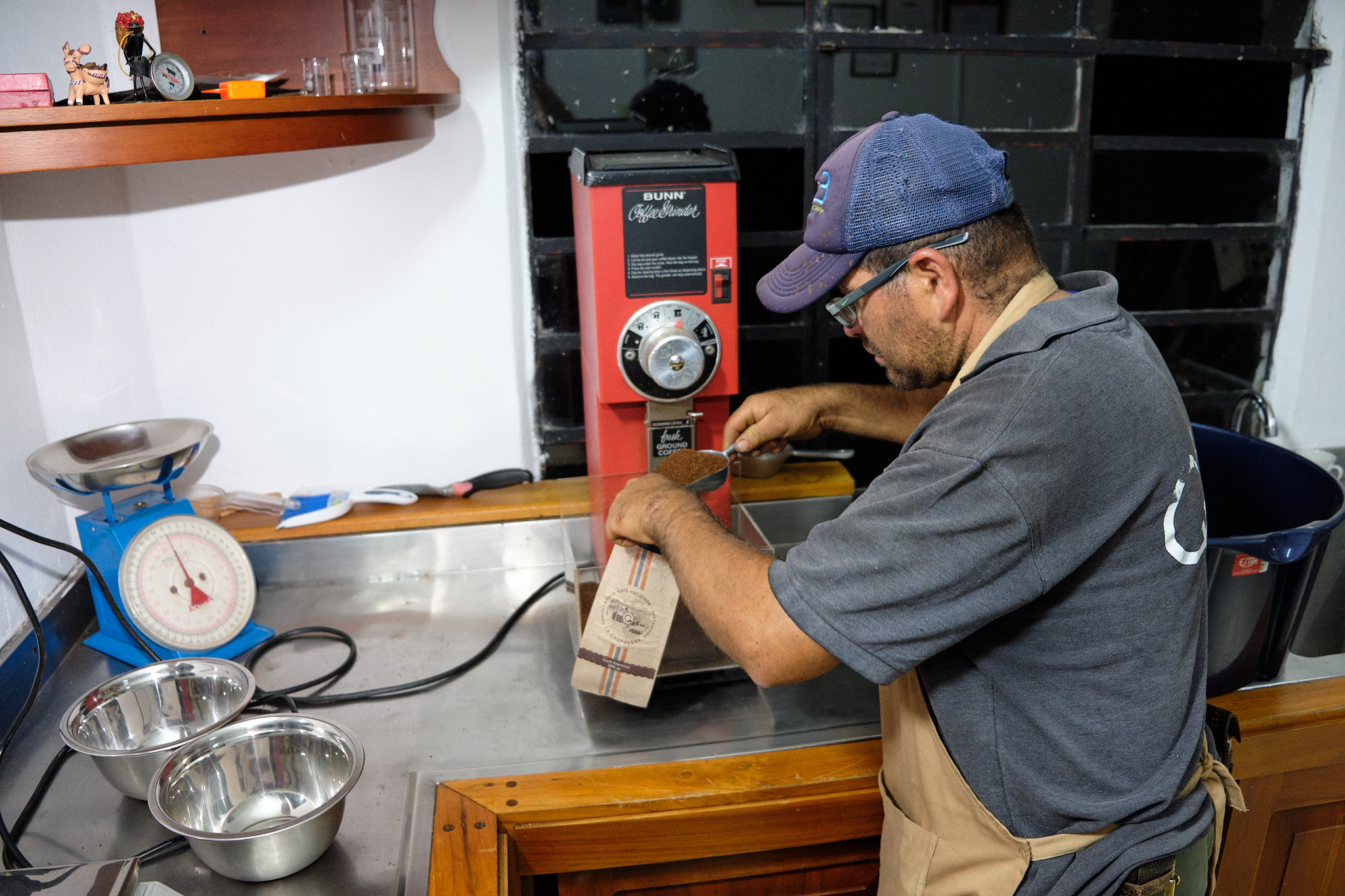
The grinding process determines which preparation of the coffee is more adequate in the end. For French press for example, a very bulky grain is desirable for the press to work at its best. For Turkish coffee the finest setting is better, as well as for expresso. Something in between is better for normal paper filters, which the vast majority uses.
-
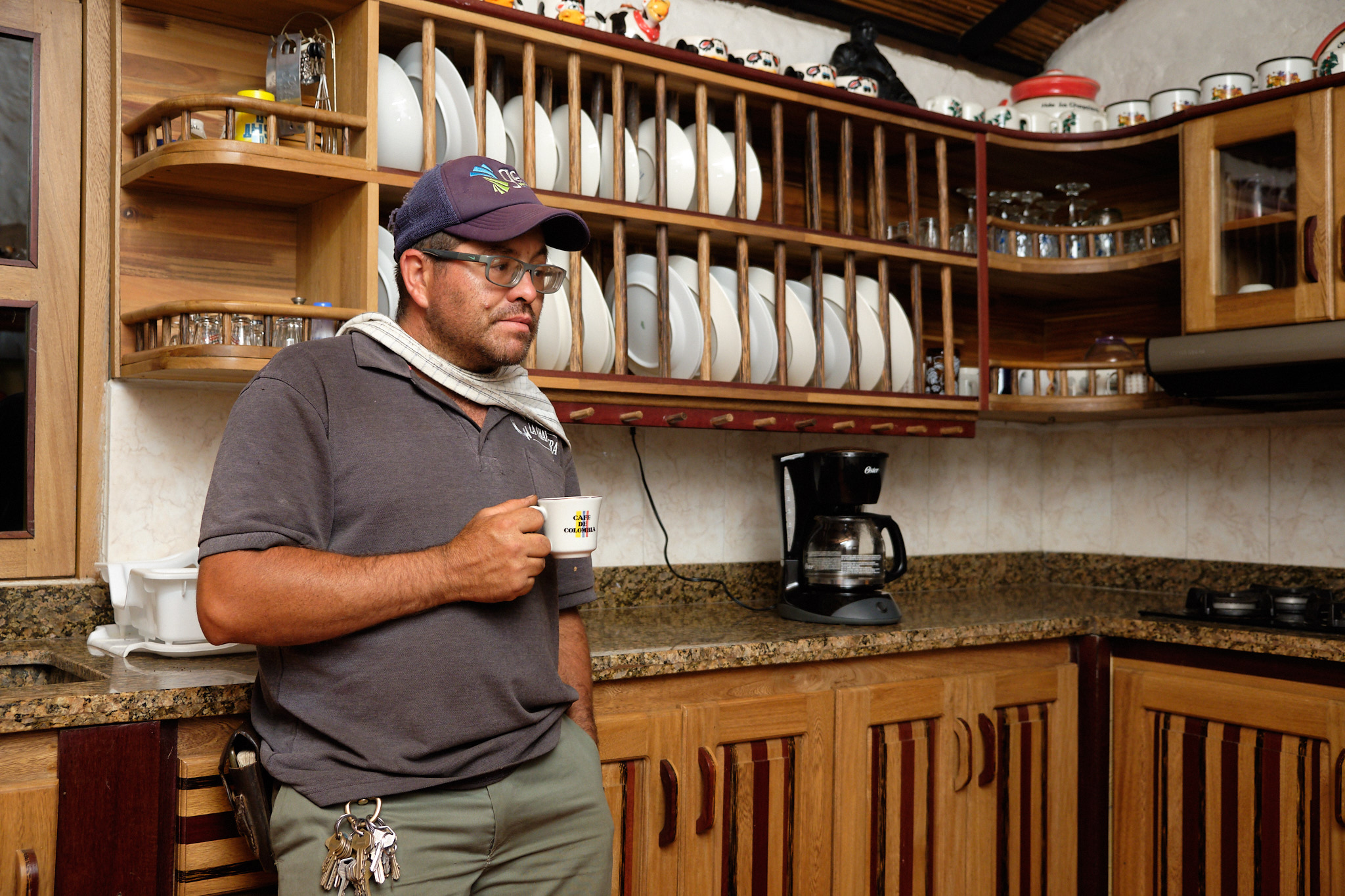
Jorge Andres Jimenez Maldonado is one of the fixed workers at la Chapolera. He administrates all the other workers and takes care of the cows in the farm as well. He is 41 years old and is married. After a long day at work he likes to enjoy freshly roasted coffee to ensure its quality and keeps track of it in a Protocol he is constantly updating.